Tesla changed how a lot of us think about cars. It made the car something that keeps getting better after you buy it, with updates that show up overnight and a screen that keeps learning new tricks. Millions of people bought in, partly for that post-car lot commitment. Rivian's own Halloween themes comes straight out of the playbook Tesla wrote.
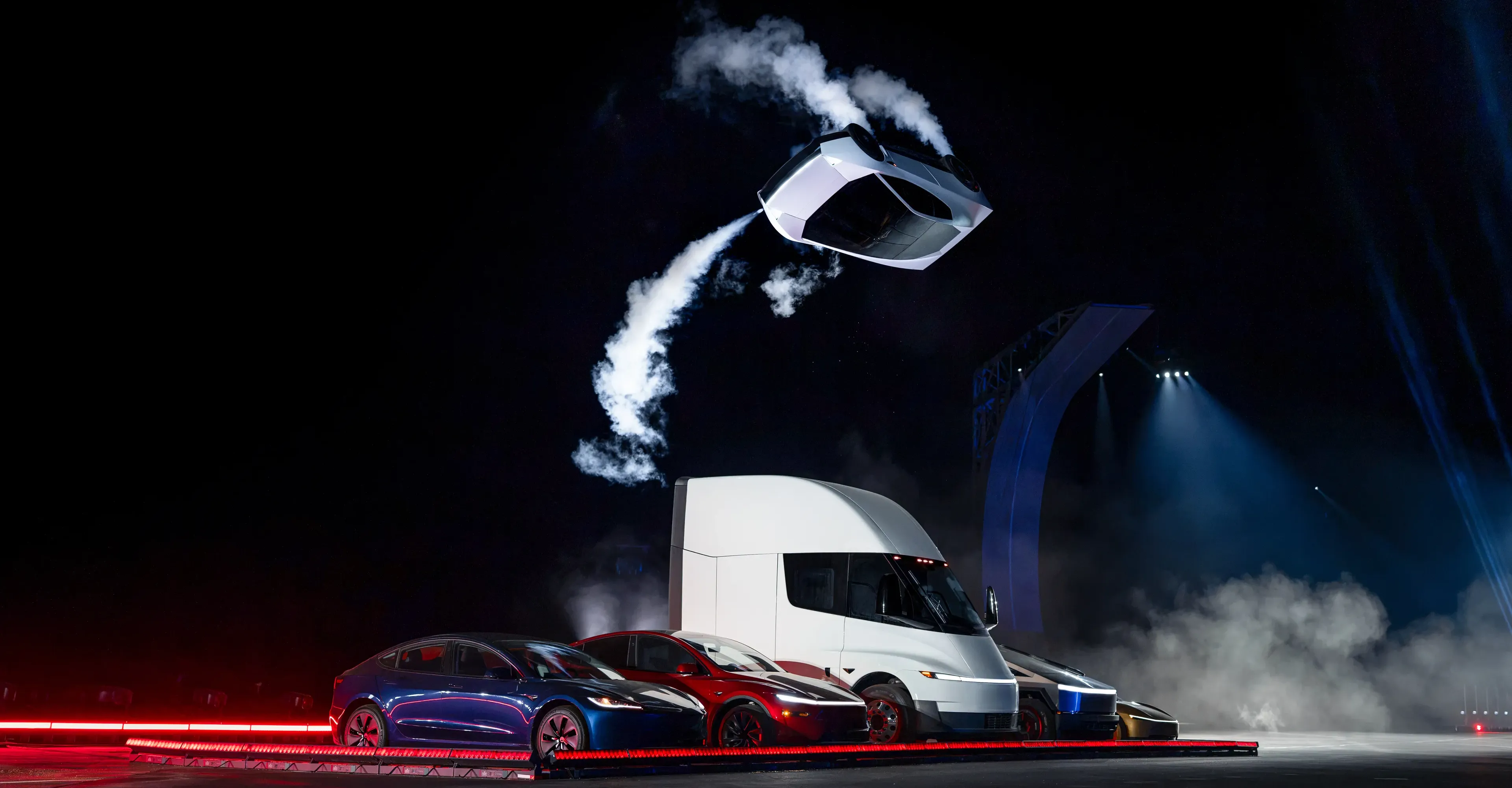
On October 15, Tesla finally showed their long-awaited Roadster in Texas. A demo car used SpaceX cold-gas thrusters to jump five other (real) Teslas, and Tesla claims 0-to-60 in under a second (!) for the thruster trim. As engineering theater, it's pretty hard to beat the marriage of an EV pioneer and a rocket company's fever dream-come-reality. Halo cars are an old, legitimate strategy, too: build one completely insane or impossible car so the ordinary ones feel a little more special by proxy.
Spectacle tells customers what a company can do, but Delight shows them what it will do for them.
Look at who gets what, though. There are three Roaster trims.
- Performance, the road car, takes a $50,000 deposit and doesn't list the thrusters.
- Thrust has them, as a limited release with a $250,000 deposit.
- Rocket, the one with the full flight system, is invite only, seats one, and will likely never be approved for any roads my parents drive on.
Production is promised for 2028, eleven years after Tesla first showed this Roadster and said deliveries would start in 2020. Almost none of what made the show is headed for the cars Tesla owners actually drive, other than the props that were vaulted over (maybe subliminally bad optics).
 Expand image
That's the difference from what I wrote about the value of delight. Rivian's theme went to the people who already bought in. The Roadster's best moments are for a stage, a dubious and extremely limited release, and an undefined invite list that screams "not you". For the company that taught everyone a car could keep getting better for the people who already own it, that's a strange direction to point. Tesla, with its Roadster -- and their Cyber Trucks/Cabs/Toasters before it -- continues to lose the magic and advocacy it once created with its actual customers, in favor of weird flexes that alienate the very people that got them where they are today.
Spectacle tells customers what a company can do, but Delight shows them what it will do for them.
Note: When did I create an op-ed car blog?