ANDMORE Markets App for Buyers
Part of ANDMORE Customer Platform
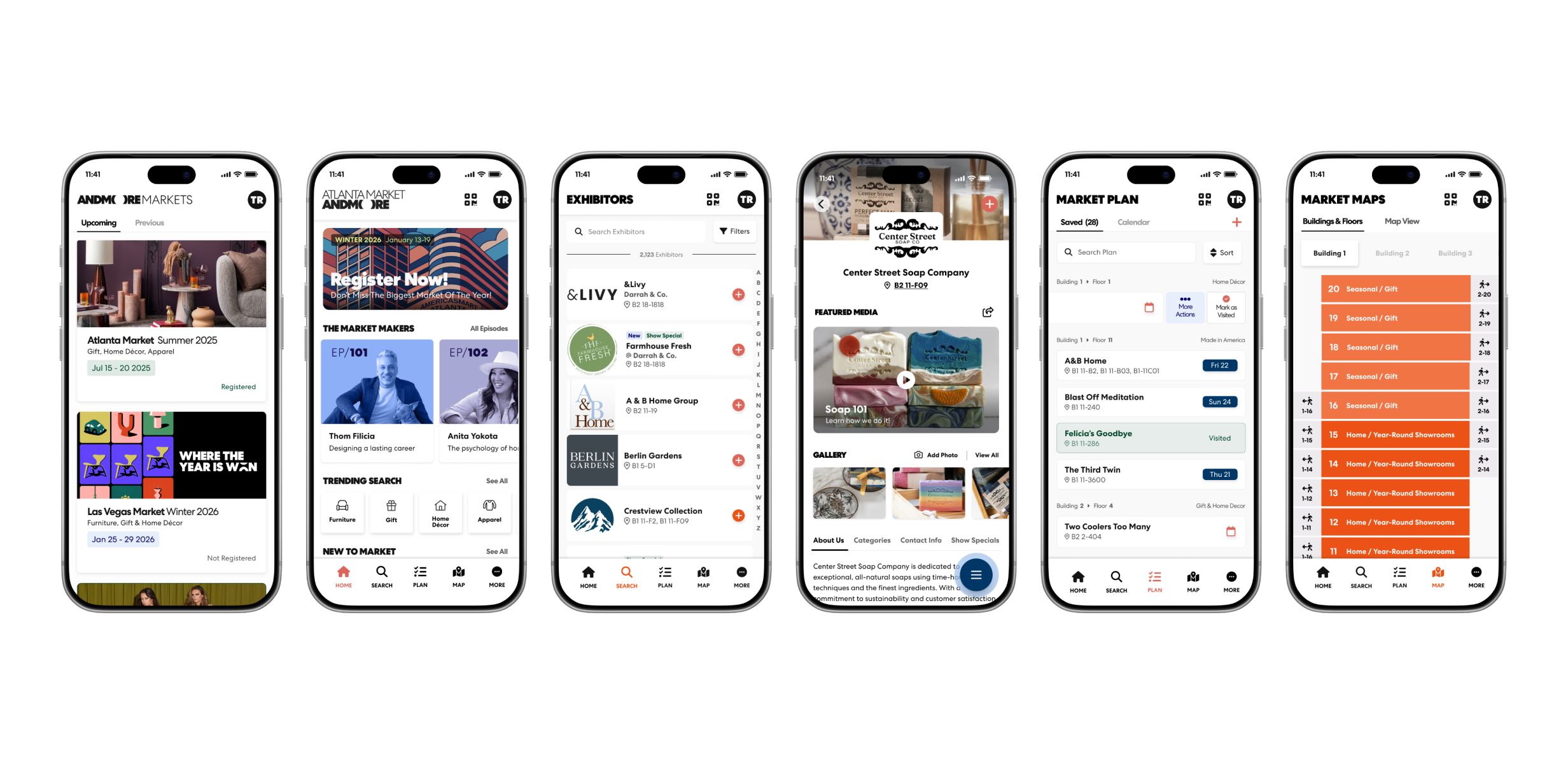
Five Apps & A Blindspot
Buyers who work the B2B home and gift markets were switching between five separately branded market apps, built by several different operators. Most repackaged the web marketing site, top-of-funnel content in an app wrapper, and none of them supported the two jobs a buyer actually has: planning a successful market and working it efficiently once they're there. Adoption was poor, and the average rating was 2.2 stars.
The business had a blind spot of its own. Past the front door of a showroom, the market operator couldn't see what buyers and sellers did, how deep the engagement went, or whether it happened at all. Seller lead retrieval was poorly adopted, and a badge scan only proved a buyer made it to the door. Sales data doesn't close the gap either: research showed orders written at market account for only about half of the orders that come out of market connections, because the rest get written and approved long after. Without that visibility, personalized experiences and recommendations were close to impossible.
We'd tried to see it before. One driver of the Juniper digital spin-out was to use showroom commerce tools to inform who was engaging where. Driven by pandemic mandates to accelerate the platform without the buyer side value, customers turned it down, and they had a fair reason: they didn't want the same company setting their rent and handling their orders without an obvious lift in at-bats with potential new customers.
The Strategic Pivot
Event apps are a mature category, and made primarily for tradeshow events: a directory and a map are table stakes, and buying one off the shelf is the sensible default. B2B Markets are different, and we had to prove it: before we built anything, we showed our PE owners that no existing event app could serve our markets. We were asked to validate that gate three different times, and the strategy and ROI held each time.
Customer research pointed somewhere narrower: one app organized around the buyer experience instead of the market, extending the web planning experience into the app buyers carry at market, aware of where they are on campus, and shaped by what they registered for and planned. The bet was that if the app earned a place in a buyer's routine by taking the friction out of their analog habits at market, it would change two relationships at once: buyer to seller, and buyer to the market operator.
It also came at the blind spot from the opposite side of the marketplace. Juniper had approached it through the tools sellers use to sell. This time buyers would generate the signal themselves, by saving showrooms, checking in, and taking photos, because doing it helped them. Data like that, across that much of the industry, didn't exist yet and it's a major factor that got the build approved.
Sellers pay market operators for at-bats with new buyers, and a market squeezes those at-bats into a few days. The better the operator gets at matching the right buyers with the right sellers in that window, the more orders sellers write and the better their showroom investment pays off. The app was built to start that flywheel: more buyers planning and using the app to capture their market visits means more signal, and more signal means better matches. Better matches means higher value on both sides of the marketplace, everybody wins.
What We Built
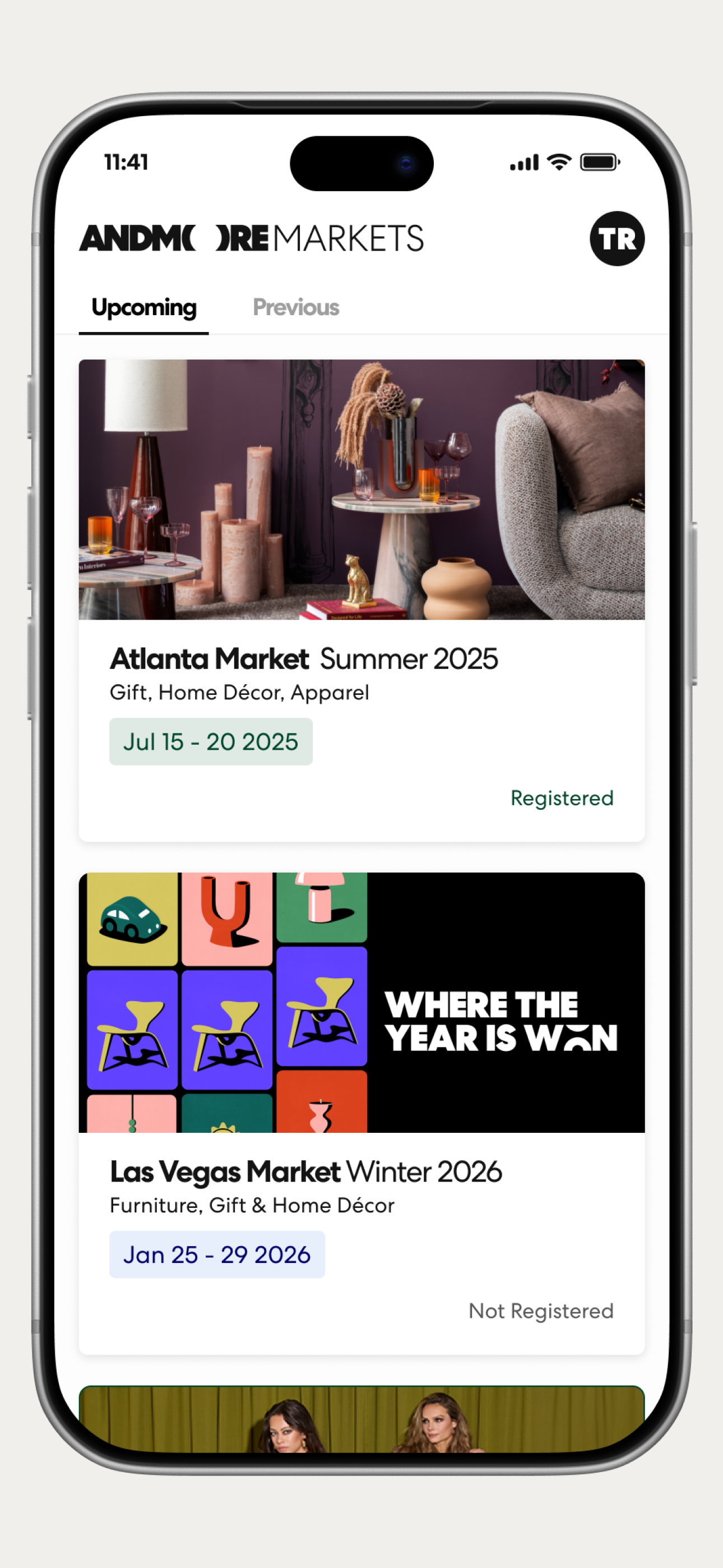
One ANDMORE Markets buyer app now covers every market. Each market follows a standard playbook for the minimum buyer information every event needs, then keeps its own presentation layer in the app for programming, industry-specific features, and featured content. What a buyer sees follows their registration, attendance, and in-showroom activity for that market. The native app syncs with the web experience and keeps working when the signal drops, then syncs when it comes back.
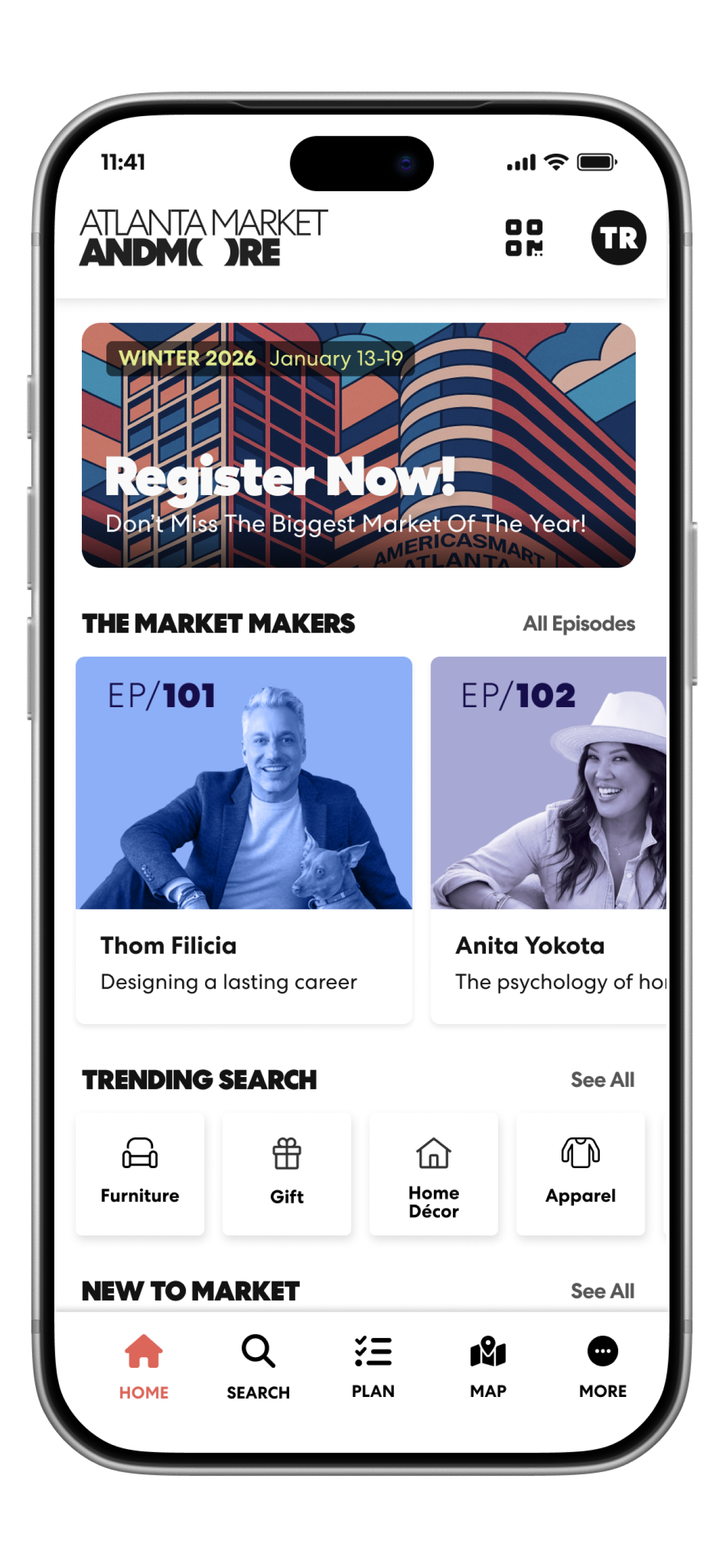
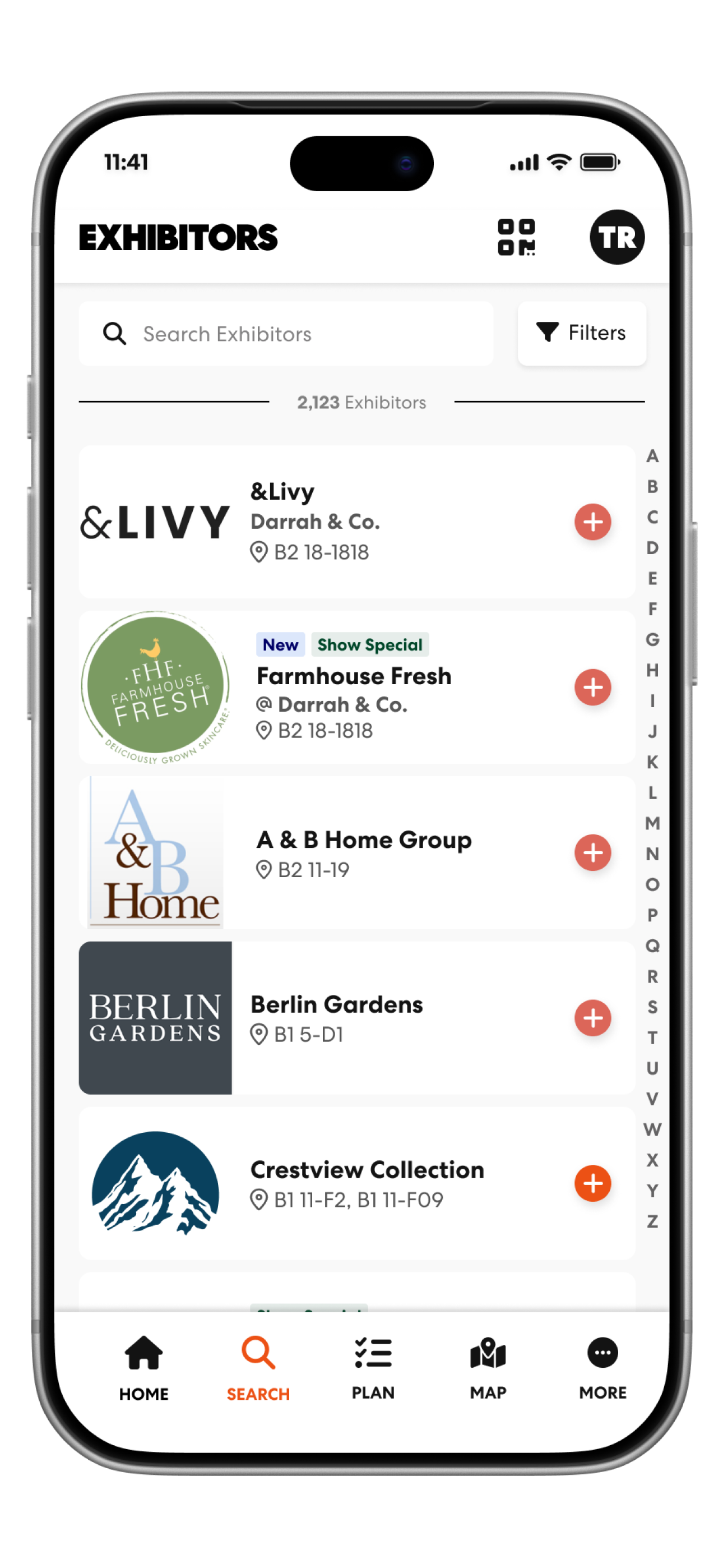
The core flow is simple by design, because adoption depended on it. Find a seller brand among 5,000+ across 400+ categories and attributes. Save the showroom to a Market Plan, or import it from a past Plan. Schedule visits and get turn-by-turn directions across campuses as large as 50 floors, 8 million square feet, and 1,000+ showrooms. Search, showroom details, and Market Plan made up almost 70% of all engagement in the app.
 Expand image
 Expand image
 Expand image
More digital-native buyers go further, keeping notes, product SKU scans, and photos tied to each showroom. The photos solve a problem every buyer knows: coming home from market with thousands of product photos and no record of where any of them were taken. In the app, they sort themselves automatically into showroom albums on the buyer's phone with their notes from that moment. Power users captured 1,000+ photos per market.
We also built computer vision tagging and categorization capabilities to feed back product trends from buyer activity to sellers, in aggregate, as well as personalization and natural-language search, backed by vectorized search data running on the device. These had been built but not fully launched when I left in February 2026.