Enthusiast Web Platform
Southern Barbecue Co.: A Love Letter to Barbecue, Built on Data
Why I built it
I was born in the deep eastern part of North Carolina and have moved steadily west ever since, eating barbecue the whole way. I started out a zealot for Eastern-style North Carolina barbecue. Age and travel talked me out of that. The methods and the sauces change from region to region, but the part where people gather around smoked food doesn’t.
Almost 20 years before this project, it was a notebook, a homemade smoker, and a well-loved, exceptionally crappy grill. The notebook filled up with tested recipes and notes on cooks. I came up with the Southern Barbecue Co. brand and its domains years ago, as something to get to once I hit the lottery.
There are tremendous barbecue resources out there. What I couldn’t find was one place to explore recipes, methods, gear, and the places worth eating at, that I could also make my own and share from, without the pop-ups, the constant banners, and the tricks to earn a click. I also have a background in enterprise UX and UI for software platforms. My family would say that only means I have too many opinions about bad digital experiences, and about menu designs.
What it does
The site is organized around what the Co. stands for. When it came time to decide, I punted and went with all of the above: Company, Collective, Conversation, and Country. Those are the four parts of the site. The Collective holds recipes, methods, gear, and pitmasters. The Conversation is Ask the Pit, Show and Tell, and Discussions. Country is Pit Stops: the caterers, trucks, and joints I’d send my own people to. Company is the about and mission pages today.
 Expand image
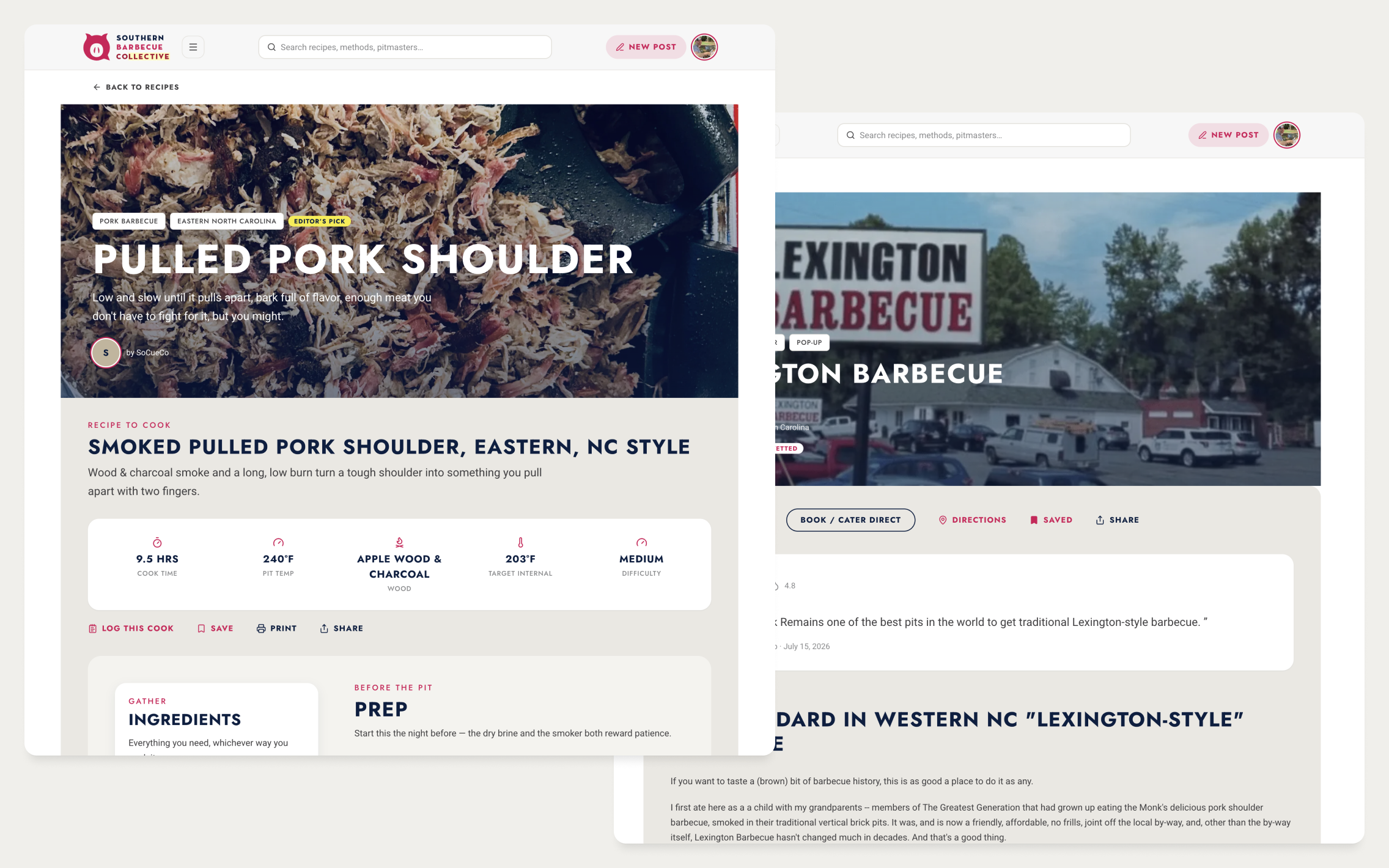
A recipe here is a dish plus every way to cook it. Chopped pork shoulder has a smoked version and a wrapped version. Each one gets its own page, with its own cook time, pit temperature, and steps, over one shared ingredient list. Switch the method and the cook, the gear, and the related recipes switch with it.
Methods are their own library, from smoke and char-grill to dry brine and wrap. Each one has its steps, tips, common mistakes, and the kinds of gear it calls for. A recipe inherits its gear from its method, so the smoked pork shoulder arrives with a smoker setup and thermometers before I add anything by hand. Gear is rated only after it’s been cooked on and reviewed, and nothing unreviewed can be marked as a pick.
Styles connect the cooking to the eating. A style like Lexington or Eastern North Carolina has its own page: what defines it, where it comes from, and the recipes that cook it. It’s built to list the pit stops that serve it too, as those get tagged. Pit stops are vetted, never paid.
Sign in and it becomes yours: save recipes, log a cook with notes and a photo, and join the conversation. Reading never needs an account, and a sign-in prompt never stands in front of the page. Recipes and methods each print on a single page.
How it’s built
I’m not a developer by title. I designed Southern Barbecue Co. from the brand to the data model, and built it alone with Claude Code. The decisions went into a written record before they went into code, and the open ones were mine to make.
The decision I’d defend first: the data came before the pages. Dishes, cook methods, gear, styles, pit stops, and the links between them were settled as one schema, and every page was designed against it. The editing tool I write in sits on top of that data and isn’t allowed to change its shape. That’s what I mean by owning it. The catalog isn’t locked inside a pile of posts, or inside a publishing tool’s idea of what a recipe is.
The second: the connections do the work. A recipe’s technique links come from its method and from the steps themselves, never from a list someone keeps up. The top pick for a kind of gear is worked out from what’s been reviewed. Add a method to a dish and that version gets its own page, its own gear, and its own entry for search engines.
The parts that would’ve been faster to skip are in there too. A section with nothing written for it is left out, never shown empty. The flame ratings are only ever ours, and nothing in the data a search engine reads is made up to look better.
Where it stands, November 2026
Southern Barbecue Co. is live, and the catalog is small: 6 recipes cooked 11 ways, 9 methods and techniques, 4 gear reviews, and 2 pit stops, with 51 more recipes in draft. If I were a content creator, or retired, it would be ten times that size. It’s a passion project, and what sets it apart is the design and the architecture underneath it, not the page count.
Next come more recipes, and the Shop, Members, and Events pages that sit in the footer today with nothing behind them yet. I designed and built it alone, and I’m looking forward to welcoming pitmasters and tastemakers once the site matures a bit. I’ll post updates here as it gets there.
Have a look at Southern Barbecue Co. If you know your way around a pit, tell me about it.