Independent Web App
Spinfluences: The Albums That Flow Through Us
Why I built Spinfluences
Plenty of apps will keep a list of your favorite albums. I wanted something else. I built Spinfluences to bring two things I love together: music, and good design that makes for an interesting experience.
Spinfluences is a way to show, and share, how you think about your music and how it has shaped your life: through relationships, through time, or through an idea that only makes sense to you.
Spinfluences is meant to bend. No two people came to their music the same way, so no two maps should be built the same way. It’s for anyone who loves music and design.
What Spinfluences does
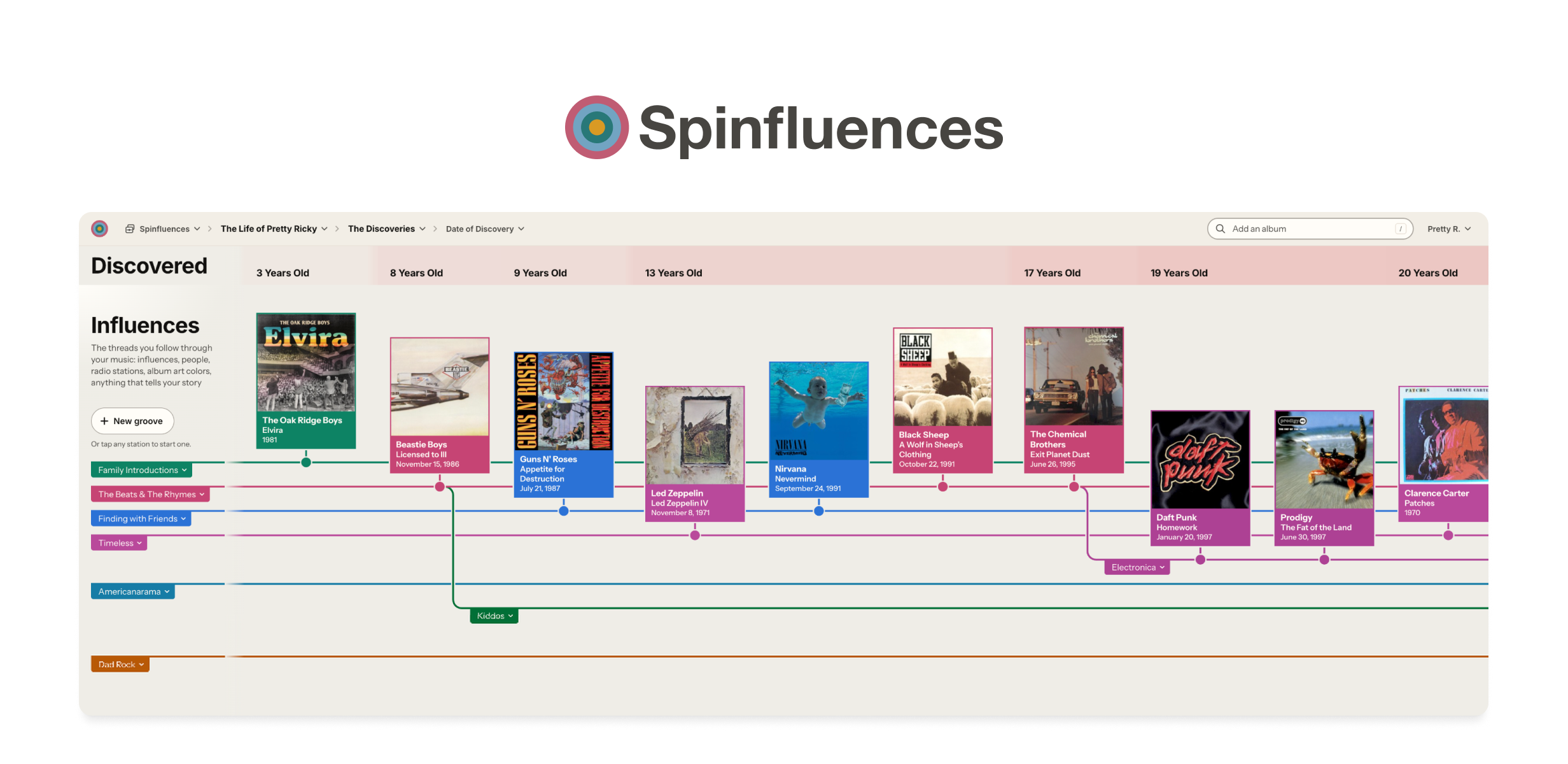
Start with one album that changed you and the Flow map grows from there.
A Flow is a transit-style map of the albums that shaped you. Each album is a station. The lines that run through them are Grooves, and a Groove can follow anything: influences, people, radio stations, album art colors... literally anything that tells your story the way you want it.
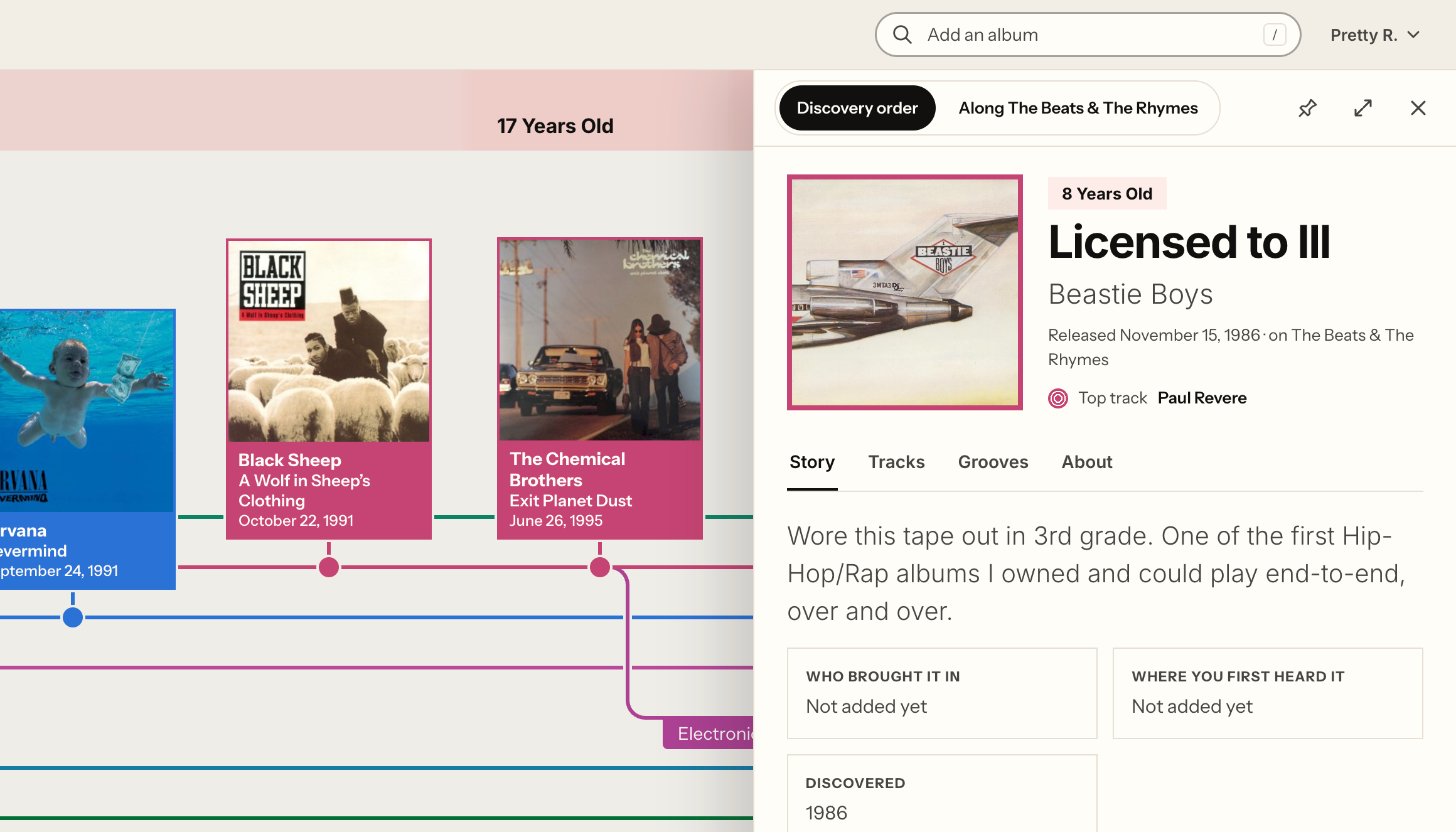
A Flow can be sorted by your age, by eras you name, or by the date each album found you. Every album opens to its own story in your words: you can add your liner notes, who brought it in, where you first heard it, and when you discovered it.
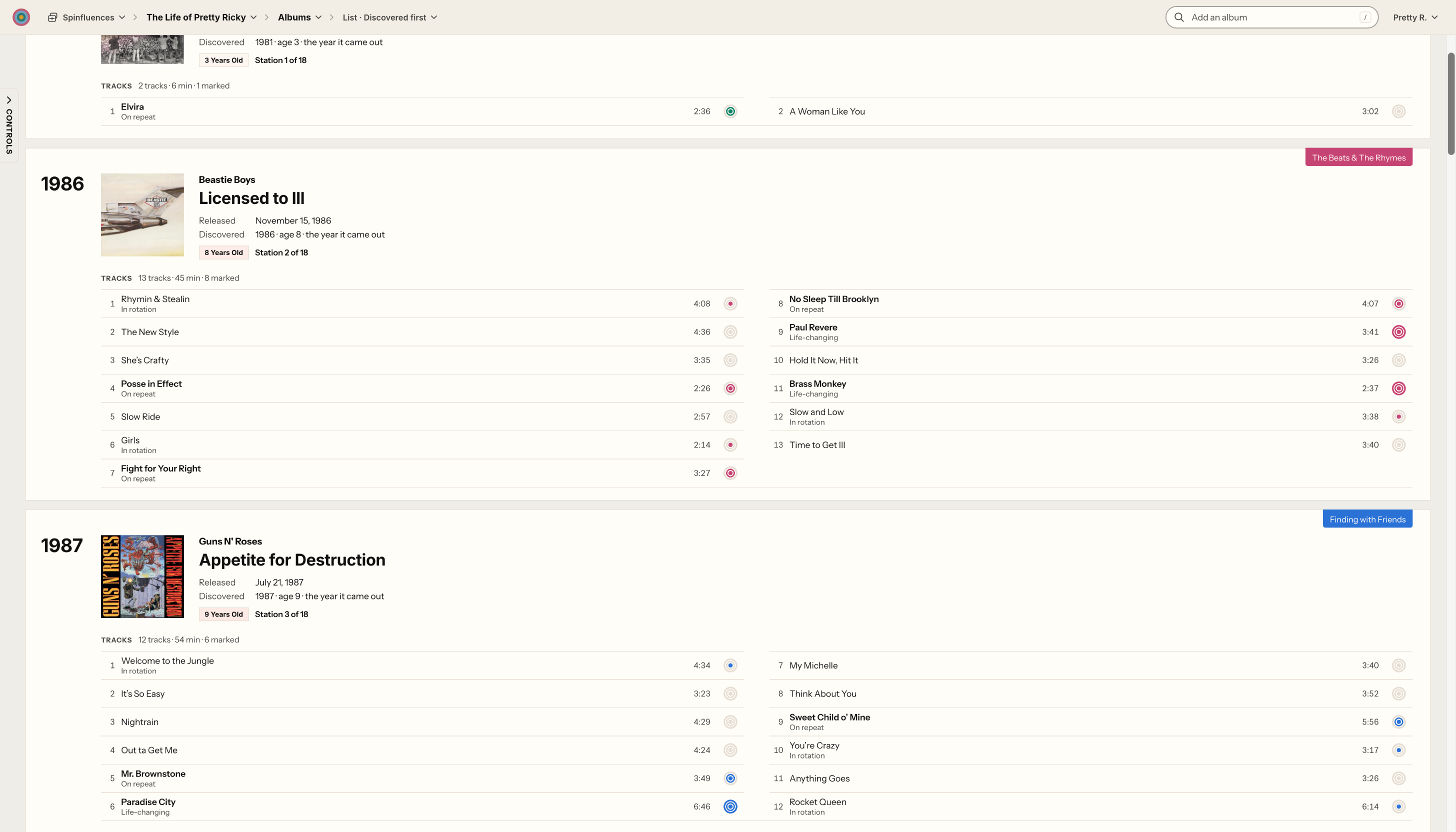
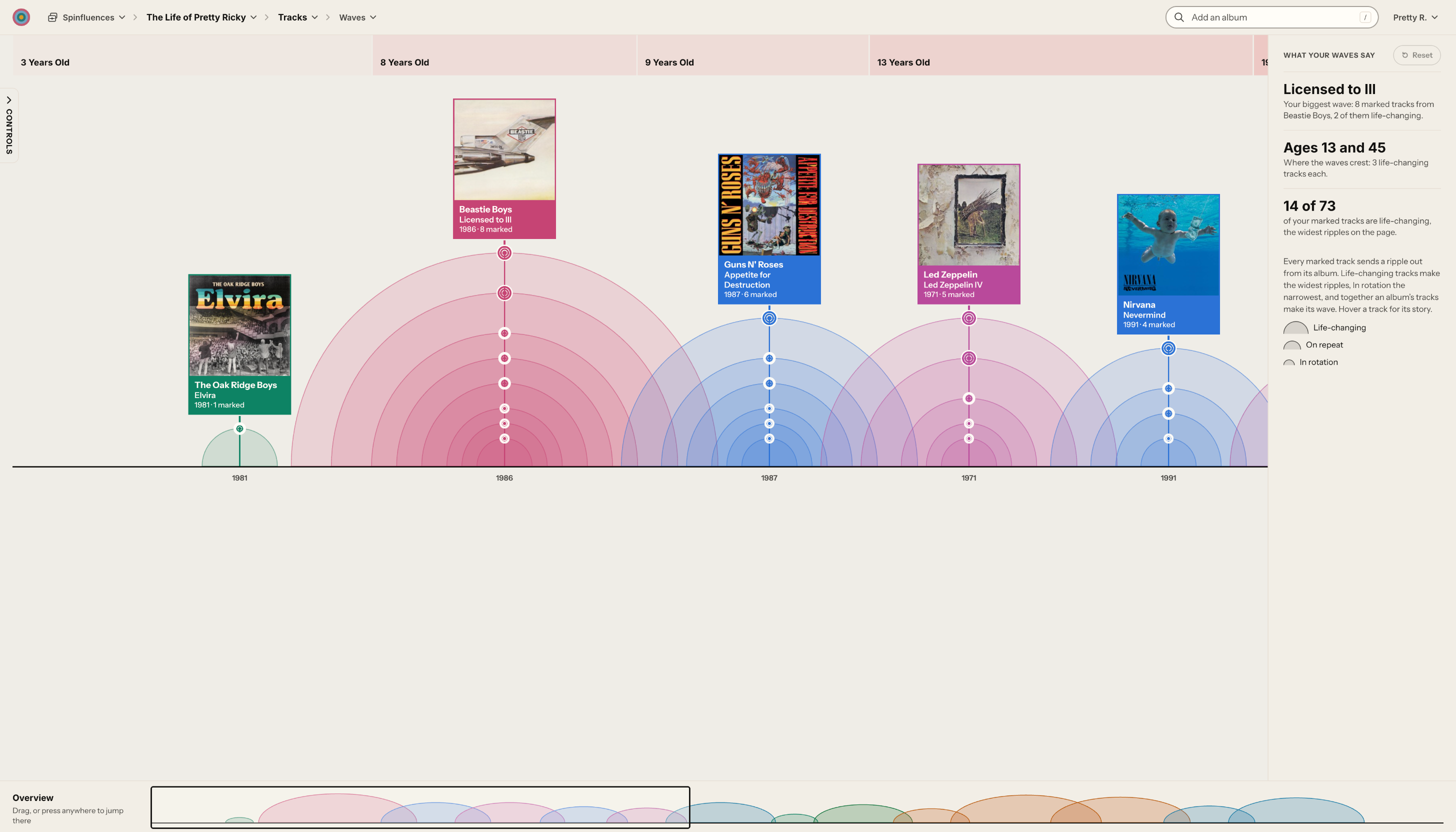
Tracks get marked by their impact on you at three levels: in rotation, on repeat, and life-changing. Those Tracks make Waves.
 Expand image
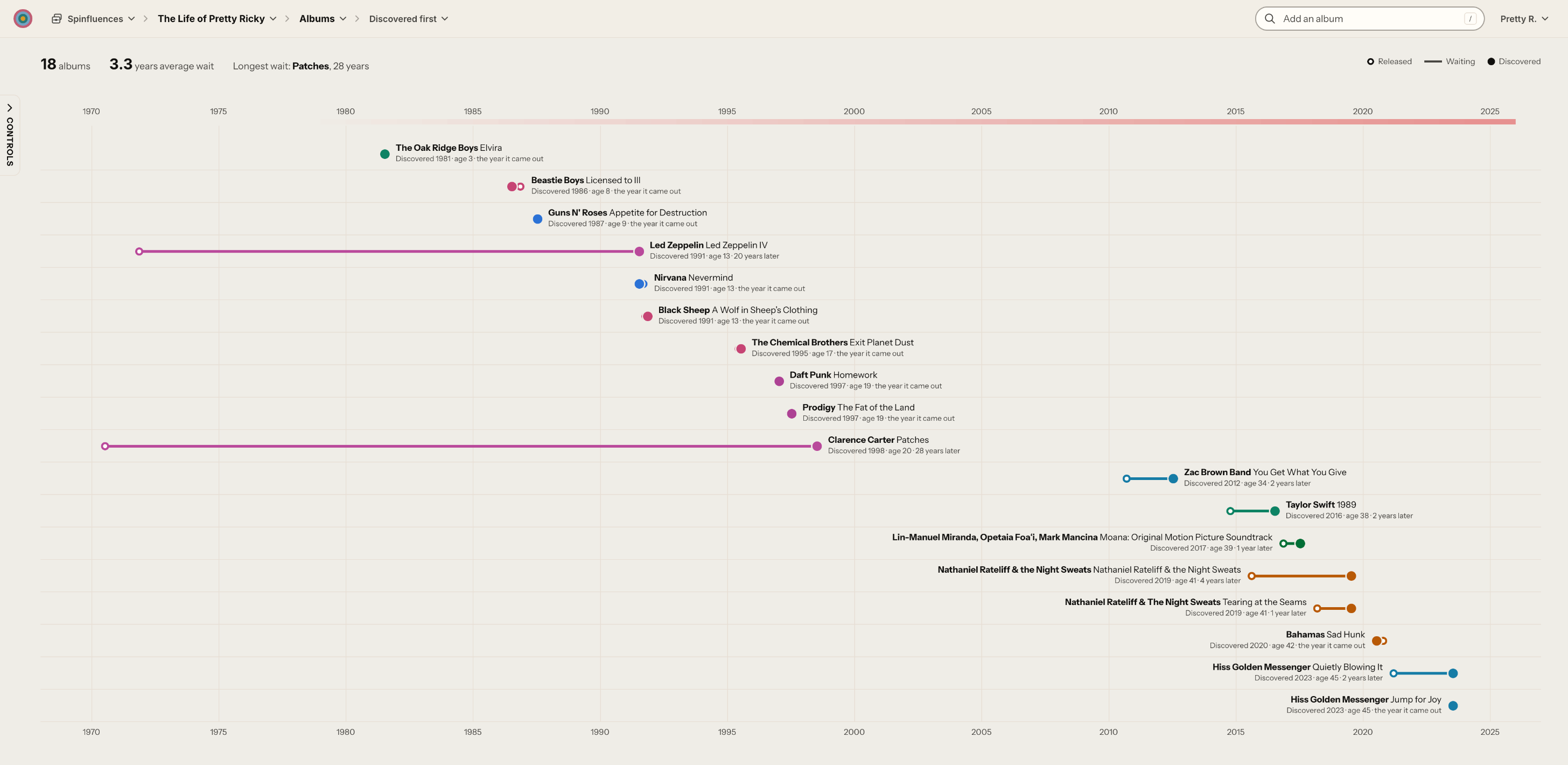
The same albums can be read other ways. Albums draws each record from the day it came out to the day you discovered it, so you can see how long the music waited for you. Tracks turns every marked Track into a Ripple and every album into a Wave.
 Expand image
 Expand image
 Expand image
When a Flow is where you want it, share it as a link, as an image, or even create physical versions of your Spinfluences and Flows as gifts.
How it’s built
Following a beautiful weekend in New York City, where I had plenty of headphone time walking the High Line by the water and riding on the Subway, I started creating the identity and design system. The design is largely an homage to the ubiquitous transit system there, and the timeless modern appeal of Dieter Rams work at Braun, which I had also seen on display in the city. I worked out the designs first in Figma, working through the complex system of how a Flow's Grooves work together and intertwine so that it could be driven by rules in data. After creating a sample set of screens to define the way the app's chrome should let the music do the heavy lifting, I worked out the broader system within Claude Design.
I built Spinfluences largely with Claude Code against the design system, boards, and prototypes. I run my solo projects like my team projects and ran Spinfluences in phases, each one ending with a written report and a stop for my testing and review before the next began. The ideation work started in early September and the first commit was October 7, 2026.
The decision I’d defend first and where I spent a lot of design time: the Flow's map is drawn by rules, not by hand. Layout is worked out from a Flow’s data alone, and tests compared the result against the design board and system rules. So every person’s Flow follows the same rules mine does.
Some of those rules never bend. An album’s date is always its original release date, opposed to a reissue’s. A Groove that an album inspired always leaves from that album. Card text has to stay readable on whatever color its groove takes.
The parts that would’ve been faster to skip are in there too. Every edit to a Flow comes with an Undo. The phone gets its own screens, not a squeezed desktop (it's own design struggle for a largely horizontal experience!).
One credit. The Flow in these screens is The Life of Pretty Ricky. Pretty Ricky and I go way back and share some of the same musical tastes and Spinfluences.
Where it stands, November 2026
Spinfluences is live and open to anyone. Printed posters are launching end of the month: a Flow, or your Top Albums, as a print of spun records. After that: comparing your Flow with a friend’s through Confluences, finding new friends, and discovering new music.
I'm thrilled to report that Apple finally got through updating my developer account after almost 8 weeks (!), which has been blocking several cool features.
The part I’m most curious about is what the maps add up to. A recommendation engine models taste from what you play. A Flow records how music actually reached you: who handed it over, where you were, and what it led to next. That’s how recommendations work between people, and it’s what connects them. I think that’s worth getting down.
Start with one album and see where it goes. If you make a Flow, tell me what’s on it.